Goal of this stage: hear your first distant station with the least money and the least noise. Do it in order. Do not buy anything until step 1.3.
1.1 Start in the browser
The fastest receiver is one you do not own. The University of Twente WebSDR in Enschede, the Netherlands, has run since 2008 and lets hundreds of people tune the same antenna at once. The KiwiSDR network lists receivers on every continent, each with its own antenna and local conditions. Open one, pick the 31-metre band (around 9.4–9.9 MHz) in the evening, and scroll. You will hear broadcasters within minutes.
Use web receivers for a week. Learn what AM, SSB and a digital burst sound like. Note which bands are busy at which hours. This costs nothing and calibrates your expectations before you spend.
1.2 Decide: portable or SDR
Two paths. Pick one.
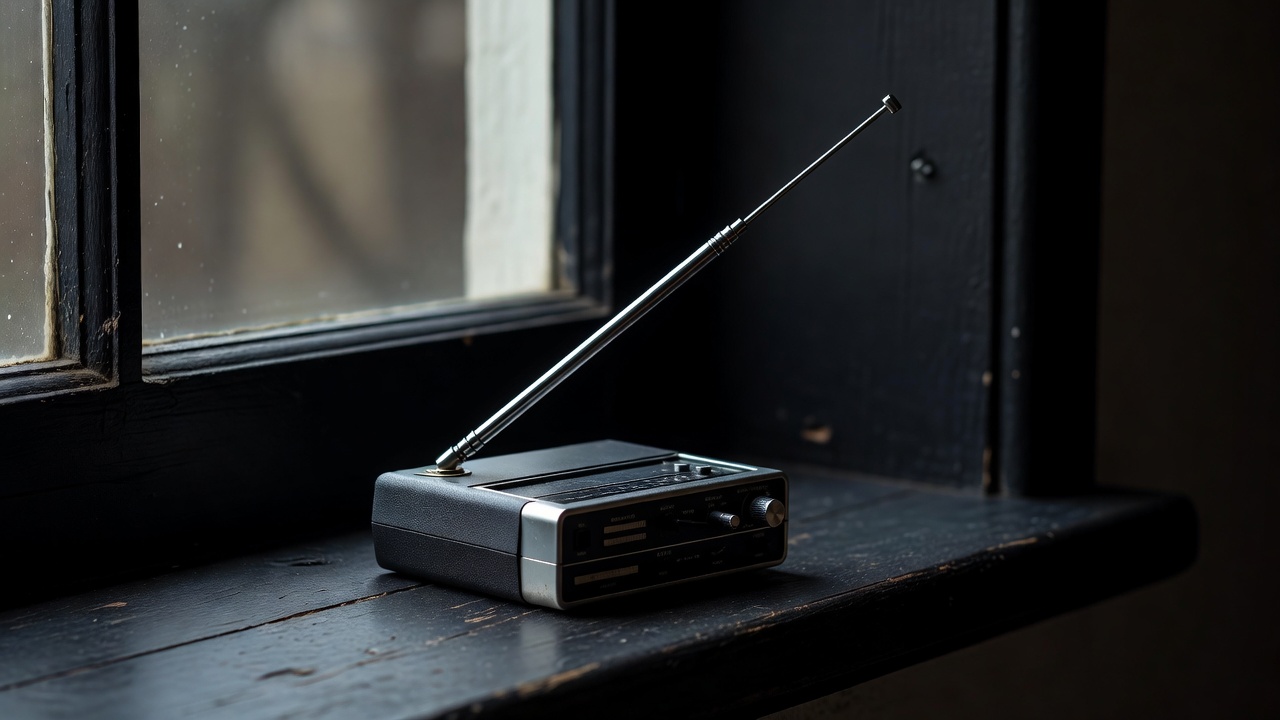
Portable receiver. A battery radio with a telescopic whip, a tuning knob and a speaker. Models such as the Tecsun PL-880 and Sangean ATS-909X2 add single-sideband (SSB) reception, which you need for amateur and utility signals. Choose a portable if you want to listen away from a computer, at a park, on a balcony, or during a power cut.
Software-defined radio (SDR). A small box or USB dongle that hands raw radio data to software on your computer. The RTL-SDR Blog V4 dongle includes a built-in HF upconverter; the SDRplay RSPdx and Airspy HF+ Discovery are stronger performers on shortwave. Software such as SDR++, SDR# and HDSDR displays a waterfall — a scrolling picture of the whole band — so you see signals before you hear them. Choose SDR if you want to identify and record signals, which matters in stage 03.
1.3 Buy once, buy for SSB
Whatever you choose, confirm three things: continuous coverage across 3–30 MHz, SSB capability, and an external antenna connector. A radio without SSB limits you to broadcasts. A radio without an antenna socket limits you to its whip.
1.4 Get the antenna outside the noise
The antenna matters more than the receiver. Most homes are full of radio noise from LED lamps, phone chargers, plasma screens, solar inverters and network equipment. That noise sits exactly on the shortwave bands.
Work outward:
- Telescopic whip — fine near a window, away from electronics.
- Long wire — 10 to 20 metres of wire run outdoors, usually through a 9:1 unun transformer and coaxial cable to the radio. Cheap and effective.
- Active magnetic loop — a compact loop with a small amplifier. Less sensitive to local electrical noise and rotatable to null interference. Good for apartments.
Test noise first: switch off household devices one by one while listening to an empty frequency. When the hiss drops, you have found a culprit.
1.5 Stay safe
Keep all outdoor wires well clear of power lines. Disconnect and ground outdoor antennas before thunderstorms. Never climb onto a roof alone to rig a wire.
Checkpoint
You are ready for stage 02 when you can tune a web or physical receiver, switch between AM and SSB, and hear at least one station from another country. Next comes the map: which band, at which hour.